|
Further impressive features of the
ML include 4MATIC permanent all-wheel drive, new developments to
the chassis and innovative driving dynamics systems, all of
which improve performance in both on-road and off-road
situations. Its active and passive safety features are typical
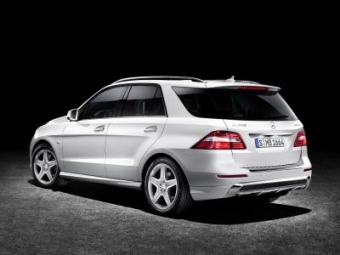
for the brand. A characteristic body design, together with a
versatile interior that is highly conducive to its occupants'
wellbeing, enhance the driving experience in the new M-Class.

Long-distance runner: high
efficiency ensures extensive range State-of-the-art engines, a
clear policy of engine downsizing, a best-in-class Cd value of
0.32 and a comprehensive range of BlueEFFICIENCY measures all
contribute to delivering superb energy efficiency. BlueTEC
diesel engines and the new generation of BlueDIRECT petrol
engines provide the basis for the excellent economic efficiency
and outstanding environmental performance of the new M-Class. As
far as the diesel models are concerned, now only available as
BlueTEC units with SCR emissions technology, the focus is firmly
on downsizing and on the new version of the V6 CDI engine.
In the ML 250 BlueTEC, the
3.0-litre V6 of the previous model is replaced by the thrifty
four-cylinder EU6-standard unit already familiar from, for
instance, the S-Class.
The ML 350 BlueTEC uses a completely reworked 3.0-litre V6
engine, which also more than meets the EU6 emissions standard
and delivers far better performance, yet with considerably
reduced fuel consumption. The efficiency improvements have been
achieved, above all, through the use of the innovative TWAS
(twin-wire-arc spraying) technology already used with great
success since 2005 in AMG's high-performance engines. The
positive results here have led Mercedes-Benz to adapt this
cylinder wall coating technology for use in the V6 diesel engine
as well. The process reduces internal friction in the engine
significantly. At the same time, the weight has been reduced by
4.3 kg, as there is no longer any need for the grey cast iron
cylinder liners that, until now, had to be pressed into the
engine block. The benefits are striking: with these measures
alone, fuel consumption could be reduced by around 3 percent.
Photos: Daimler
(June 09, 2011)
|
|