
This Week:
- GM
Adopts ParaXSG As Its Next-Generation Design Collaboration Technology
. - BMW
X5 Sports Activity Vehicle Outperforms All Other Utility Vehicles in
Insurance Institute for Highway Safety Bumper Test
. - Automobili Lamborghini Holding focuses Group activities / Subsidiaries in Italy restructured
- Swift
retires as Ford Controller; Hansen, Acton, Ross, Macdonald to new posts
. - Laguna
II: designed faster and at less cost, thanks to the Technocentre
. - GM/SUZUKI
Further Strengthen Strategic Alliance
. - Visteon Corporation Confirms Participation in Covisint Internet Exchange
.
© 1998
- 2000 Copyright &
Disclaimer
Automotive Intelligence,
www.autointell.com
All Rights Reserved .
For questions please contact
editor@autointell.com

News of September 19, 2000
|
Laguna
II: designed faster and at less cost, thanks to the Technocentre |
|
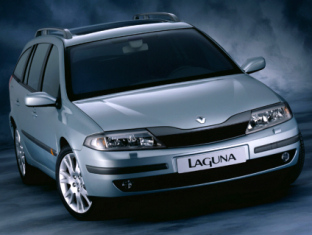
Renault Laguna II Photo: Renault |
|
Paris,
France - The
Laguna II was entirely designed and developed at the Technocentre. It is
the first project to be completely carried through at Renault’s
Research and Development Centre, based at Guyancourt in the Paris region
of France, which allows Renault to design better and faster, yet with
less expense. By gathering together on this single site all those who
contributed to the design and development of the Laguna II, as well as
the design of its means of production (other than the powertrains),
Renault ensured perfect synchronisation between development of the car
and its means of production. The objective was to deliver to Sandouville
a car with the highest level of quality, needing no subsequent work
either to the car itself or its production process. Renault
spent more than 5 million hours on development work as part of the
initial overall layout of FRF 6 billion (EUR 914.7 million) for the
Laguna replacements, representing a saving of over 30% compared with the
previous generation. - FRF
3,200 million (EUR 487.8 million) for industrial investment, - FRF
2,400 million (EUR 365.9 million) for development costs, - FRF
400 million (EUR 61 million) for production start-up. 1.5-year
saving in development time in comparison with the Laguna The
Laguna II was developed in 42 months compared with 58 months for the
Laguna, cutting almost a year and a half off development times. The
"project team" dedicated to the Laguna II, within the M2S
programme department, installed at the Technocentre, in fact allowed
perfect synchronisation between development of the product and of its
processes. The Laguna II project thus brought together the expertise of
all the functional units within the authority of the project team, led
by Yves Dubreil, Renault’s M2S Programme Director. Researchers,
designers, engineers and "product/process" development
technicians, quality specialists, data processing experts,
representatives of the purchasing, after-sales, training and social
development functions were thus involved in the project. By bringing
together these areas of expertise and skills on a single site, Renault
was able to save more than FRF 1 billion (EUR 152.45 million) when
compared with a project developed in several separate geographic
locations. New
management at the service of innovation To
accelerate the integration of innovations within new vehicles designed
by Renault, the M2S programme department created a new job, the
Innovation Project Leader. He was entrusted with creating and deploying
an innovative management process to ensure that technological
innovations were integrated, within the given timeframe, in the Laguna
II and other future medium and upper-range cars in the Renault range.
The need for such a job became apparent with the emergence of the idea
of the "system" in vehicle engineering: new technologies were
no longer in effect localised within a particular vehicle function but
involved several units, calling for the mobilisation and coordination of
many "interfaces" between the areas of expertise of different
functional groups. Each of these innovations is now managed as a
sub-project, in close collaboration with the vehicle project groups. The
Innovation Project Leader draws together the necessary internal and
external skills and directs them so that the innovation becomes total,
collective and solidly established. The aim of this is to bring
innovation to market as quickly as possible, against a background of
greatly increased complexity and of ever greater constraints on time and
cost. Sandouville:
Renault’s top-of-the-range production plant Renault
will build the Laguna II in a single European factory, that of
Sandouville (Normandy, France). With a total site area of 152 ha, 51 ha
of which is accounted for by buildings, the body assembly plant at
Sandouville has specialised, since its establishment in 1964, in the
production of Renault’s top-of-the-range cars, and has produced more
than 6 million units. With a workforce of over 6,000, Renault
Sandouville is responsible for 10% of all Renault production (passenger
cars plus light commercial vehicles). As the main employer in the
region, the factory constitutes a major part of the economy of Normandy,
and is notable for its network of 44 suppliers located in 4 departments
of the region. More
than FRF 4 billion to renew production tooling To
provide for the manufacture of Renault’s future top-of-the-range
models (replacements for the Safrane, Espace and Grand Espace) and cars
in the upper medium segment (Laguna II and Laguna II Estate), the
factory has invested FRF 4.25 billion (EUR 647,9 million) in renewing
its production facilities. This reorganisation of production tooling,
focussed on operations which add value for the end customer, will allow
Sandouville to improve its productivity and its industrial performance
to achieve, one year after the start-up of Laguna II production, a
production time of 15 hours IMVP (International Motor Vehicle Program)[1].
A
more flexible factory, packed with innovations The
press shop has been modernised at an investment cost of FRF1.8 billion (EUR
274.5 million). It now comprises 6 press lines with robotized loading,
which makes the production programme more flexible. A new installation
carries out laser welding of blanks, which allows the amount of metal
used to be measured more precisely. In addition, all the facilities are
encapsulated by soundproofing enclosures. The
B.I.W. assembly shop has been completely renewed for an investment of
FRF 1.4 billion (EUR 213.4 million). With 95% automation, it houses over
400 robots which manage the different types of vehicle. Robotised
assembly of exhaust systems takes place in synchronisation with final
assembly. Assembly of the chassis and of the body shells takes place on
a flexible line. For this purpose, pallets adapted to each type of vehicle
allow the automatic stations or robots to weld the different types of
body. The
paint shop (FRF 550 million/EUR 83.8 million invested), extensively
robotised, incorporates a new cataphoretic stage using the very latest
technology which, by penetrating box sections more effectively, ensures
better protection for the body against corrosion. A new facility
completes the process by applying polymerised wax within box sections,
preventing corrosion wherever the cataphoretic protection alone would
not be sufficient. Final
assembly has benefited from an investment of FRF 500 million (EUR 76.2
million). Its robots have been renewed while a variable-height trim
facility (an investment of FRF 50 million) places the vehicle at the
best working height for the operator. This facility carries the workers
on platforms while adjusting the height of the vehicle. Apart from
improving ergonomics and reducing fatigue, it improves productivity
thanks to less movement, the elimination of raising and lowering of
production line stations and the possibility of working on both sides of
the vehicle. It allows the operator to concentrate entirely on
operations which add value for the customer. Logistics
have seen major changes thanks to the supplier industrial park but also
within the framework of L3P: Logistique Performante Programmée pour the
Poste de travail (programmed logistics performance for the workstation).
L3P supplies a sequenced flow (small batches) of parts and increases the
proportion of small recoverable containers, reducing stockholding and
improving the organisation of the workstations. This system thus results
in the transportation of 30% less container volume for the manufacture
of a Laguna II than was needed for the previous generation. A
supplier park which creates diversity on the site of the factory itself Renault
has opened a supplier industrial park covering 36,000m² and bringing
together six of the main suppliers on the site of the Sandouville
factory. The park houses six suppliers involved in manufacturing the
Laguna II and Renault’s future top-of-the-range vehicles: Antolin
(roof trim), Faurecia (seats), Inoplast (boot lids), Lear (wiring
looms), Solvay (fuel tanks) and Sommer Allibert (dashboards, consoles,
carpets, door panels). Eventually, 600 jobs could be created by these
suppliers. Apart
from strengthening links with single partners for the development and
production of important vehicle functions, the park allows the suppliers
to be situated closer to the assembly facility, most notably to make
possible sequenced ("just in time ") deliveries. A conveyor
system between the park and the assembly line places the suppliers
within easy reach of the workstations and this reduces the volume of
components in transit. At the
logistic level, supplier industrial parks allow diversity to be managed
closer to the assembly line and contribute to more secure sourcing. They
present advantages in terms of cost as well as quality. The reduction in
the amount of stock held at lineside together with the reduction of
volumes in transit ahead of time effectively result in greater economic
efficiency. In addition, direct access to the assembly line allows
immediate quality checking and thus the fast and direct correction of
any faults which arise, by the supplier, before the vehicle leaves the
line. The
Sandouville factory also houses a 7th
supplier, Plastic Omnium (bumpers), directly involved in assembly. This
supplier delivers to lineside, in process order, the parts which it
manufactures. Connected to a data processing system, it receives
messages like any other workshop forming part of the factory. Construction
of the park cost FRF 80 million (EUR 12.2 million). Investment in the
location was financed by Renault which benefited, to the extent of 20%,
from contributions from local organisations, the region and the French
state. (September 14, 2000) [1] Indicator established by the Massachussetts Institute of Technology which is based on the number of hours spent in a factory for a set number of tasks, divided by the number of vehicles produced, all of which being balanced out by a system of coefficients.
|
[Homepage] [
News] [ Companies] [
Management] [ Publications]
[ Events] [ Careers]
[Services] [Discussion] [
Guestbook]
[ Search]